|
|
 |
|
|
SOUTH WEST OFFICIAL TOON ARMY
|
|
|
|
|
This page is dedicated to some of the great Forwardss who have graced St James's Park over the years. Sadly many did not win
honours with the Toon but certainly won the Hearts of the fanatical Toon Army Fans. Over the next few months this page will be updated, so if you have a Toon Favourite please E mail me
and I will endeavour to publish that individuals profile.
|
|
Malcolm Macdonald
|
1971-1976
|
|
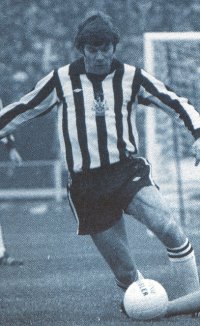 Though he began at Non-league Tonbridge, Malcolm Macdonald was born within striking
distance of Craven Cottage in January 1950 and returned home when he signed for Fulham in 1968 as a right back. Future England manager Bobby Robson converted him to a forward and, at
one stage during the 1968-69 season, he was top scorer for both the reserves and first team.
Malcolm joined the Magpies in May 1971 for £180,000 to link with John Tudor and was to follow
in the footsteps of “Wor Jackie” and become a local hero. He shared Bobby Charlton Philosophy
of shooting on sight, and, although the occasional shot would wend its way towards the corner
flag, the majority found their target and left keepers helpless. Five seasons and 95 goals later, he
was on his way to Arsenal for a third of a million pounds - much to the dismay of the Geordie fans. He made 14
appearances for England scoring six goals, five of which were in one game against Cyprus (When still a Newcastle
player). At 29 he was forced by injury to a premature retirement, he had a taste of management with Fulham and
Huddersfield but quit to run a pub in the North East. He now is a match reporter for a local North East paper and is often seen on Tyne Tees Television giving his views. Though he began at Non-league Tonbridge, Malcolm Macdonald was born within striking
distance of Craven Cottage in January 1950 and returned home when he signed for Fulham in 1968 as a right back. Future England manager Bobby Robson converted him to a forward and, at
one stage during the 1968-69 season, he was top scorer for both the reserves and first team.
Malcolm joined the Magpies in May 1971 for £180,000 to link with John Tudor and was to follow
in the footsteps of “Wor Jackie” and become a local hero. He shared Bobby Charlton Philosophy
of shooting on sight, and, although the occasional shot would wend its way towards the corner
flag, the majority found their target and left keepers helpless. Five seasons and 95 goals later, he
was on his way to Arsenal for a third of a million pounds - much to the dismay of the Geordie fans. He made 14
appearances for England scoring six goals, five of which were in one game against Cyprus (When still a Newcastle
player). At 29 he was forced by injury to a premature retirement, he had a taste of management with Fulham and
Huddersfield but quit to run a pub in the North East. He now is a match reporter for a local North East paper and is often seen on Tyne Tees Television giving his views.
|
|
Tudor
|
1971-76
|
|
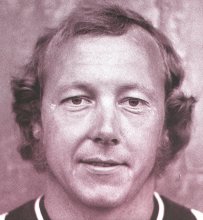 Tudor arrived at the Toon in January 1971, shortly before Malcolm Macdonald , this partnership
was to be highly fruitful over the next five years. Originally Johns position was as a midfielder with
Coventry City before being converted with great success to a strikers role. Macdonald called
Tudor his work horse he would use his aerial strength and ability to create openings in the box to
great advantage for both himself and Malcolm. In the five years at the Toon he scored 73 goals in
216 appearances. His most magical moment was scoring the winner a superb diving header in the
controversial F A Cup tie against Nottingham Forest in 1974. Macdonald and Tudor notched up
150 goals between them during this relativity brief partnership. Tudor, played briefly for Belgium side AC Ghent
before retiring through injury in 1978. He had a brief spell as a publican in Northumberland, before moving to the United States coaching in youngsters at grass-rot levels. Tudor arrived at the Toon in January 1971, shortly before Malcolm Macdonald , this partnership
was to be highly fruitful over the next five years. Originally Johns position was as a midfielder with
Coventry City before being converted with great success to a strikers role. Macdonald called
Tudor his work horse he would use his aerial strength and ability to create openings in the box to
great advantage for both himself and Malcolm. In the five years at the Toon he scored 73 goals in
216 appearances. His most magical moment was scoring the winner a superb diving header in the
controversial F A Cup tie against Nottingham Forest in 1974. Macdonald and Tudor notched up
150 goals between them during this relativity brief partnership. Tudor, played briefly for Belgium side AC Ghent
before retiring through injury in 1978. He had a brief spell as a publican in Northumberland, before moving to the United States coaching in youngsters at grass-rot levels.
|
|
Jackie Milburn (Wor Jackie)
|
1946-57
|
|
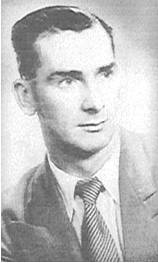 John Edward Thompson Milburn was nationally and internationally Known as “Wor Jackie” A
Geordie Idol for more than a decade and worshiped long after he hung up his boots. Jackie was
well renowned for his ability to rise for the big occasion, coupled with his lightning pace and ability
to fire lethal shots with either foot he was recognised to be the best in this era of great centre
forwards. As a former pro sprinter with the apt initials of Jet Jackie became an instant hero with
the Geordie fans. Joining United as a youngster during the war, Jackie worked as a pit apprentice
and started his St James Park career on the right wing. Always in the reckoning for an England
place, it was thought to anger Tyneside he only achieved half the number of caps he should have. After a brief
spell in Ireland and as a manager, Jackie returned to his beloved North East becoming a respected journalist. Given
a belated Testimonial at St James Park in 1967, a massive crowd of 45,404 welcomed him home. Sadly on 9th
October Jackie passed away due to cancer, this working mans hero brought Newcastle to a standstill for his funeral
this much lamented occasion was to be given national media coverage. Today a statue of “Wor Jackie” stands proudly outside the ground as a tribute to this local Hero. John Edward Thompson Milburn was nationally and internationally Known as “Wor Jackie” A
Geordie Idol for more than a decade and worshiped long after he hung up his boots. Jackie was
well renowned for his ability to rise for the big occasion, coupled with his lightning pace and ability
to fire lethal shots with either foot he was recognised to be the best in this era of great centre
forwards. As a former pro sprinter with the apt initials of Jet Jackie became an instant hero with
the Geordie fans. Joining United as a youngster during the war, Jackie worked as a pit apprentice
and started his St James Park career on the right wing. Always in the reckoning for an England
place, it was thought to anger Tyneside he only achieved half the number of caps he should have. After a brief
spell in Ireland and as a manager, Jackie returned to his beloved North East becoming a respected journalist. Given
a belated Testimonial at St James Park in 1967, a massive crowd of 45,404 welcomed him home. Sadly on 9th
October Jackie passed away due to cancer, this working mans hero brought Newcastle to a standstill for his funeral
this much lamented occasion was to be given national media coverage. Today a statue of “Wor Jackie” stands proudly outside the ground as a tribute to this local Hero.
|
|
Tino Asprilla
|
1995-1997
|
|
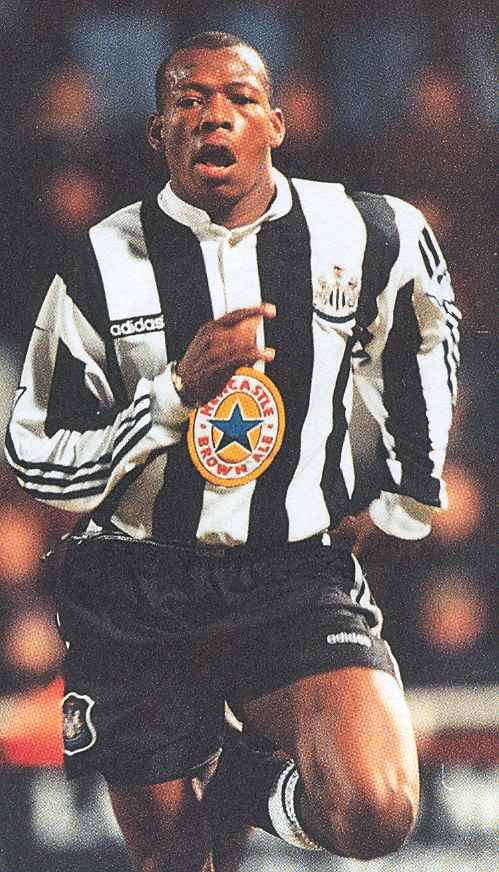 The jury is still out as to whether Kevin Keegan's acquisition of Colombian showman Faustino
Asprilla in early 1996 knocked his side's drive for the Premiership out of gear. There are those that
say he should have left his tried and tested strike force of Ferdinand and Beardsley well alone. As it was, Beardsley moved out wide to accommodate the newcomer and 'Tino' came off the
substitute's bench just hours after putting pen to paper to mesmerise opponents and fans alike. He debuted at rivals Middlesbrough's Riverside Stadium, and stole the spotlight from their own
South American, Juninho, with his skill. That was no surprise to fans of his former club Parma, where he'd formed a deadly partnership with Swede Tomas Brolin after arriving from NAC
Medellin. The jury is still out as to whether Kevin Keegan's acquisition of Colombian showman Faustino
Asprilla in early 1996 knocked his side's drive for the Premiership out of gear. There are those that
say he should have left his tried and tested strike force of Ferdinand and Beardsley well alone. As it was, Beardsley moved out wide to accommodate the newcomer and 'Tino' came off the
substitute's bench just hours after putting pen to paper to mesmerise opponents and fans alike. He debuted at rivals Middlesbrough's Riverside Stadium, and stole the spotlight from their own
South American, Juninho, with his skill. That was no surprise to fans of his former club Parma, where he'd formed a deadly partnership with Swede Tomas Brolin after arriving from NAC
Medellin.
His three full seasons in Serie A brought 23 goals in 73 appearances, a strike rate of one in three that was
impressive in the circumstances. His goals also helped his side win the UEFA Cup. Always a player who rises to the
occasion, Asprilla's saved his best for the European stage, scoring twice in the 1996-97 campaign against
Ferencvaros. Unfortunately, his spectacular goal celebrations didn't stop at his trademark cartwheel, and high-
jinks with a comer flag resulted in a yellow-card ban that kept him out of the game against Monaco, when his
services were much missed. Whether or not he justifies Keegan's description of 'One of the best five players in the
world', Tino has already made himself a Newcastle folk hero with his elastic limbs, magic control and devastating
pace. Nobody will ever forget his hat-trick on 17 September against Spanish Giants Barcelona in the Champions league.
|
|
Bryan (POP) Robson
|
1964-1971
|
|
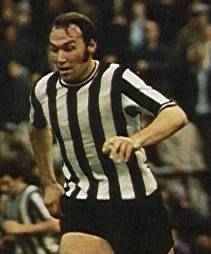 Bryan Robson is one of the few players in the History of the English game have notched 300
goals yet never received an England cap. Having played Non-league football for Clara Vale, he waited nearly two years after signing to make his debut against Charlton in Division Two in
September 1964. His goal was the winner, and would alternate with Trevor Hockey in the Number
7 shirt for the rest of the season that saw Newcastle go up as Champions. By the end of the decade he was the clubs main source of goals, having formed a fruitful big -man small man
partnership with Wynn Davies, the lanky Welsh target-man bought from Bolton in 1966. Bryan Robson is one of the few players in the History of the English game have notched 300
goals yet never received an England cap. Having played Non-league football for Clara Vale, he waited nearly two years after signing to make his debut against Charlton in Division Two in
September 1964. His goal was the winner, and would alternate with Trevor Hockey in the Number
7 shirt for the rest of the season that saw Newcastle go up as Champions. By the end of the decade he was the clubs main source of goals, having formed a fruitful big -man small man
partnership with Wynn Davies, the lanky Welsh target-man bought from Bolton in 1966.
He top-scored with 30 goals in all competitions in 1968-69, while Malcolm Macdonald, who
succeeded him, rated him the third best finisher of his generation behind Greaves and Law. Robson continued to
impress, his accuracy with a dead ball providing the opportunities for others ,as when a corner helped Bobby
Moncur head Newcastle into the lead against Inter Milan in 1970. That same year he represented the Football
League, but, despite two Under-23 Caps, was destined never to win a full cap. The diminutive striker played a big
part in the Fairs Cup run that followed the Inter game, but problems with the club led to him moving South to West
Ham in 1971 for £120.000 the first of many moves in that decade. The likable Robson may never have won
International honours, but his value was underlined by the clubs that bought him, sold him and bought him again He later became involved with Manchester United Reserves.
|
|
Mirandinha
|
1987-88
|
|
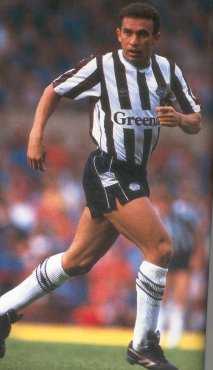 Despite what you may hear emanating from Teesside, the first Brazilian to play in English football
strutted his stuff at St James' Park. Da Silva Francisco Mirandinha arrived from Palmeiras in August 1987, summoned by manager Willie McFaul to push the side that bit closer to glory. Despite what you may hear emanating from Teesside, the first Brazilian to play in English football
strutted his stuff at St James' Park. Da Silva Francisco Mirandinha arrived from Palmeiras in August 1987, summoned by manager Willie McFaul to push the side that bit closer to glory.
United splashed a then-record £575,000 for his services, persuaded by a 52-goal haul in he
season before his migration. Something of a wanderer, he'd previously played for several clubs, including Botafogo and Santos of Pele fame.
His record of 300 goals in South American football had wonthe diminutive dribbler international honours -fittingly,
perhaps, he won his first cap at Wembley and scored against England in a 1-1 draw -but as autumn turned to winter he failed to reproduce that form with any regularity in the mid-season mud.
He also appeared to have difficulty settling ( a familiar story to Boro fans), yet the first season he graced the side,
they hit the heights of eighth in the top flight. He numbered penalty-taking among his skills, and was potentially
lethal with any kind of dead ball. After another, less successful season during which McFaul packed his bags,
new manager Jim Smith, who understandably gave the Brazilian less leeway than the man who'd first brought him to Tyneside, decided to dispense with his services.
Yet, the magic touches he displayed in his brighter moments remained long in the mind of appreciative fans Whether
Mira the Magpie could have integrated better-he clashed with Paul Gascoigne the pitch when Newcastle played Monaco in a friendly-could have been down to his team mates himself.
In flashes, Mirandinha gave glimpses of his undoubted skill. And, unknowing, he gave Faustino Asprilla-the next
South American star to come to earth on Tyneside-a bench mark to surpass.
|
|
|
